
2025 UNFCCC COP 30, Belem, Brazil
I have attended a high-level convening COP30 pre-event on “Bridging the Gaps – Advancing Coherent Policies for Climate Adaptation and Mitigation for Agriculture and Food Systems” in Santos on 7 November 2025. The overall unifying message generated from the convening is “Build nature-positive, sustainable, and inclusive food systems as the bridge connecting climate, land and biodiversity actions – rooted in agroecology, family farming, fair finance, coherent governance, and meaningful participation of local actors”.
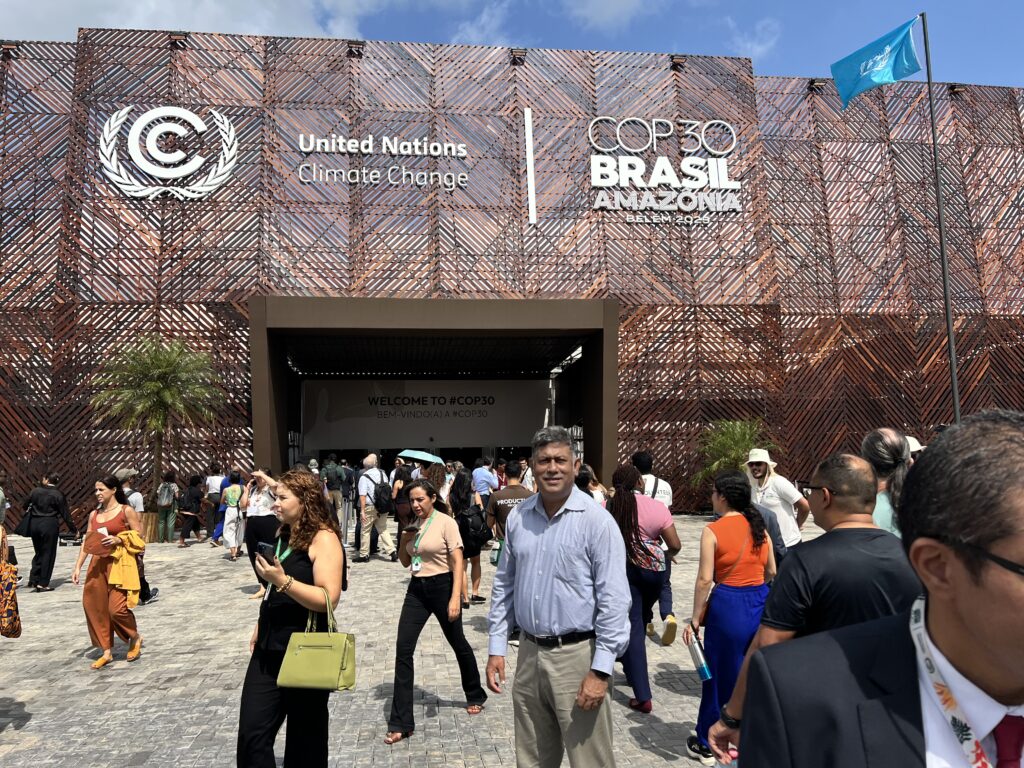
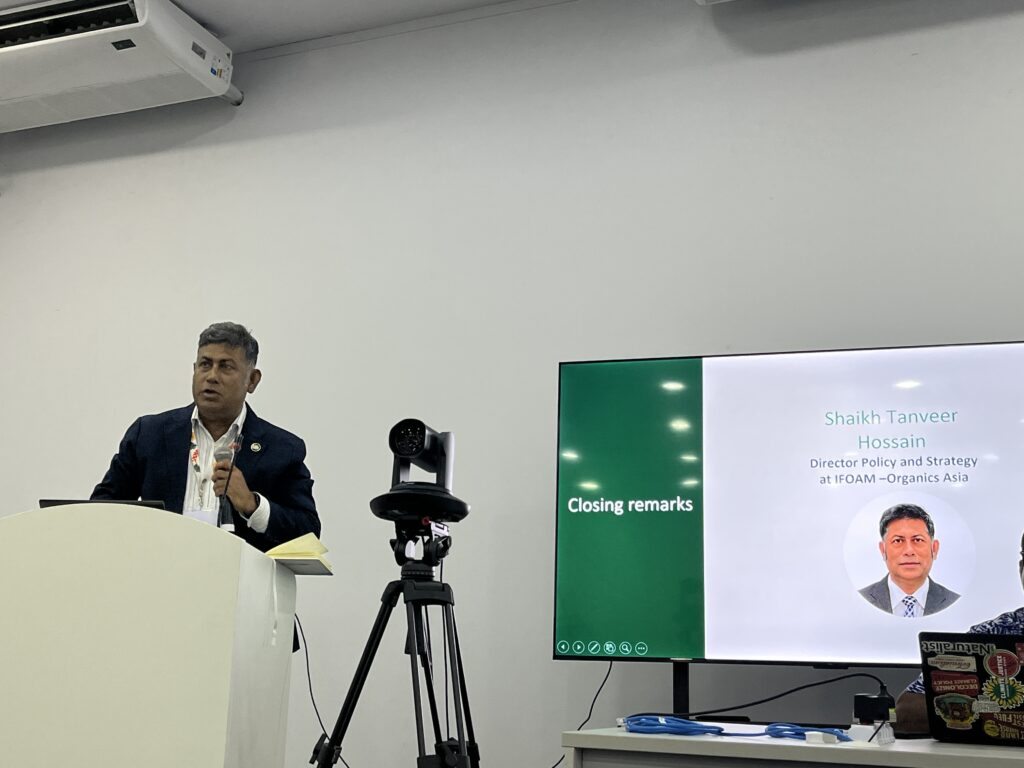
In addition, I have attended several side-events and programs during week-1 of the main COP30 event (10-15 Nov 2025). Among others, I provided the concluding remarks at the side-vent on Agroecology as a Non-Market Climate Solution under Article 6.8).
The discussion points/learnings were –
– Agroecology and the organic movement had already shown the world that climate solutions already exist in our fields, in our forests, and in our communities.
– Agroecology truly represents the essence of Article 6.8 that is, advancing non-market approaches which foster cooperation, build capacity, and deliver climate action rooted in equity and sustainability.
– Experiences already demonstrate that real climate solutions do not always need to come from carbon markets but they can also emerge from community-driven, knowledge-rich systems that regenerate ecosystems, strengthen livelihoods, and enhance resilience.
– Agroecology offers and brings together multiple benefits from adaptation and mitigation, to biodiversity protection, food sovereignty, and social justice. It is, at its core, a cooperation framework: connecting local innovation with national policy, and linking grassroots practice with global ambition.
– As the Article 6.8 negotiations continue, the evidence shared today gives us a strong message: non-market approaches must be recognized not as complementary, but as central to achieving the Paris Agreement goals. Agroecology provides a tangible example of how countries can enhance their nationally determined contributions (NDCs) and National Adaptation Plan (NAPs) through integrated, participatory, and inclusive actions that go beyond carbon accounting.
– Across Asia and around the world, farmers are already practicing these principles. They are regenerating soil, conserving biodiversity, reducing chemical dependency, and rebuilding local food systems. These are not abstract concepts, rather these are the living examples of non-market climate action in motion.
– We should maintain strong social and environmental safeguards ensuring that the principles of equity, inclusiveness, and farmer leadership remain at the heart of all non-market initiatives. From the perspective of the organic and agroecology movement, we see this as not only a technical process, but a transformative opportunity to transform food and farming systems toward sustainability, dignity, and cooperation.
– We should remember that climate ambition is not measured only in tonnes of carbon reduced, but in the resilience of people and ecosystems strengthened. By embedding agroecology within the framework of Article 6.8, we can help countries deliver climate action that is both effective and just action that restores the environment, empowers local actors, and sustains future generations.
– Also remember that the non-market doesn’t mean non-value. Agroecology generates enormous ecological, social, and cultural value that cannot be measured only in carbon tonnes or market prices.
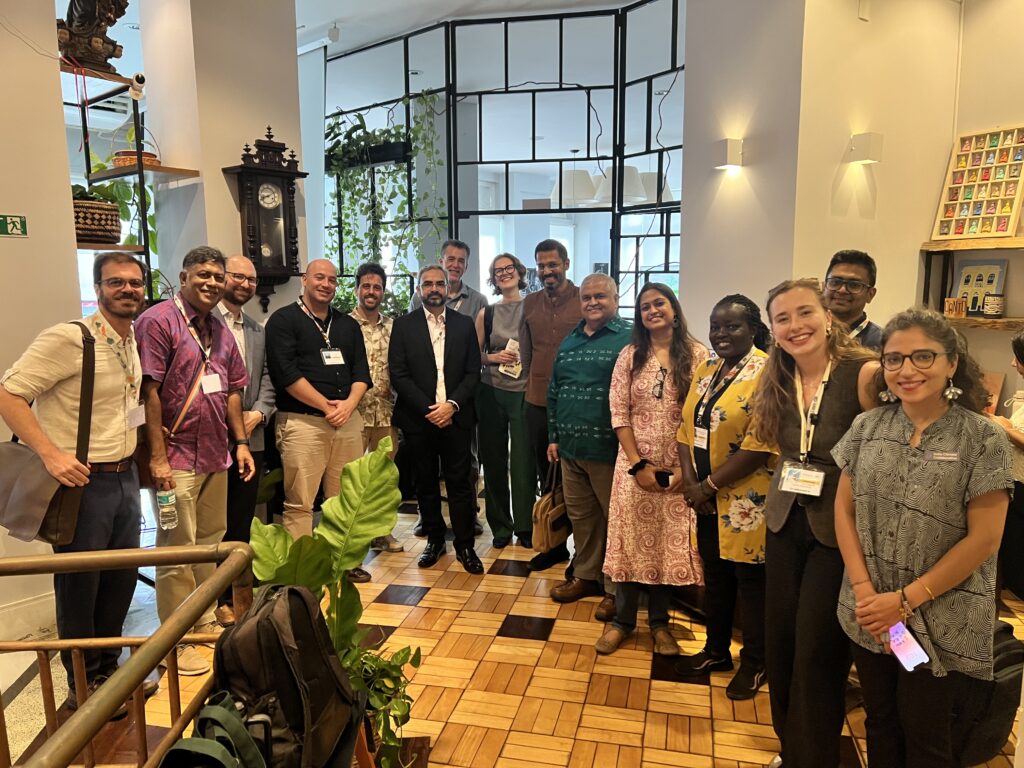
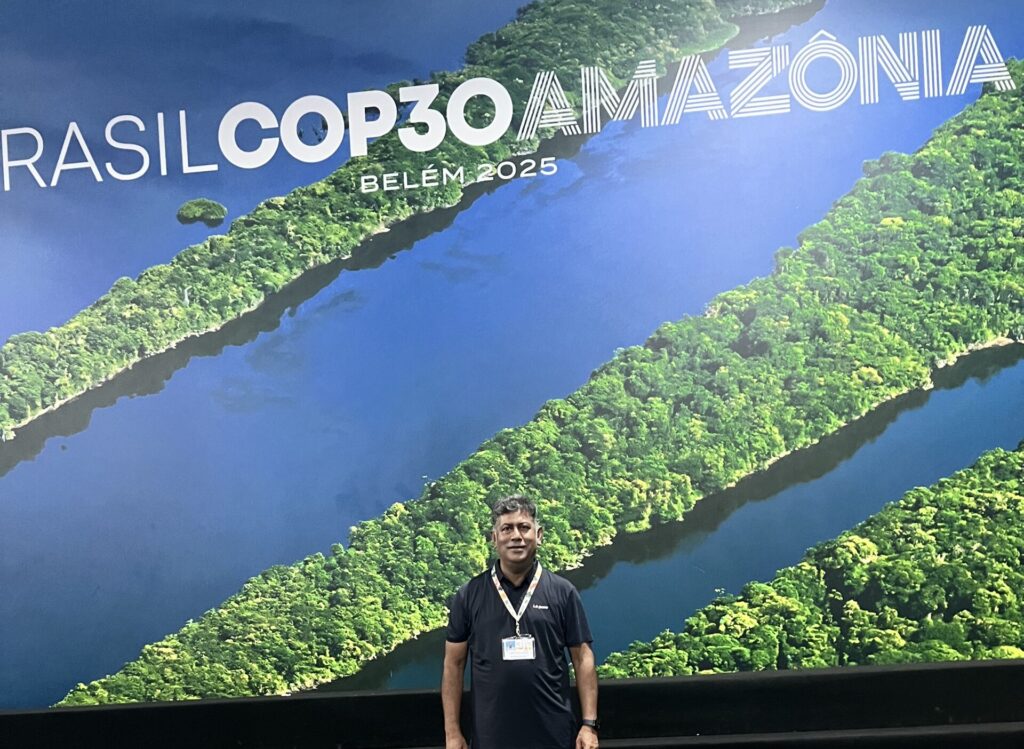
My general impression of COP30 is that there is a strong emphasis on transforming agrifood systems, as well as on strategies to address issues in light of agroecology and related concepts at different levels and in discussions. In contrast to earlier COPs, this one has a deeper discussion on sustainable solutions at the root level, which is really positive.
The climate crisis is, in essence, a moral crisis. Now is the moment for sincere environmental transformation and bold leadership for our forests, our climate and our people.
Dr. Shaikh Tanveer Hossain
Director, Policy & Strategy, IFOAM – Organics Asia
Ambassador, IFOAM – Organics International
President, Landcare Bangladesh
2024 Fiji Study Tour to Queensland’s Sunshine Coast.
2024 Fiji Study Tour to Queensland’s Sunshine Coast.
Clinton Muller, RMIT University
The Sunshine Coast, Queensland, hosted a delegation of representatives from the Fiji Landcare project in September 2024, continuing the series of international cross border learning as part of the tripartite ACIAR Project between Fiji, the Philippines and Australia. The study tour, which included representatives from the Ministry of Agriculture and Waterways, Fiji National University and farmers, including Farmer Group Tei Tei Taveuni, built on previous exchanges between Philippines to Fiji, and Fiji to the Philippines, and was aimed at fostering knowledge exchange and strengthening partnerships in sustainable land management. The Sunshine Coast was chosen for this additional study tour due to the shared similarities to Fiji, including a subtropical climate, soil types, comparative agricultural crops and the impacts of climate change on farming communities near coastal developments. Over the course of five days, the 18 delegates engaged in site visits, discussions, and hands-on learning that emphasised sustainable land management practices and community resilience. The importance of peopled-centred approaches in land management emerged as a key theme throughout the tour, including during the first site with a visit to the Caloundra Community Centre. At the Community Centre, Dr. Tina Lathouras from the University of the Sunshine Coast (UniSC) and Tomas Passegi, the Centre Manager, facilitated discussions on social sustainability and community resilience. The Fijian delegation engaged in this discussion, sharing reflections on their strong kinship systems and emerging challenges including ageing farmers, urban migration, and the impacts of overseas labour schemes. The tour also included visits to several agritourism and commercial farms, as well as research centres. During these site visits, delegates explored crop diversification, agroforestry, and sustainable farming practices, with Australian farmers sharing experiences of managing market challenges and extreme weather events. A visit to the Noosa and District Landcare association was a particular highlight, showcasing community-driven efforts in land restoration and ecological conservation. The shared impacts of climate change were explored during a tour of the Blue Heart Carbon Project. The coastal floodplain management project balanced diverse land uses of agriculture and conservation and exploration of alternative income sources, whilst preparing for the impacts of sea level rise and population displacement – a topic resonating deeply with the Fijian delegation. Agri-tourism and value addition were other prominent features within the tour agenda, and included visits to the Buderim Ginger Factory and Nutworks. These enterprises shared how they integrate sustainability into production while creating engaging tourism experiences, offering potential models for Fiji’s growing agri-tourism sector. The study tour was culminated by a memorable dinner featuring stories from local Kabi Kabi elder Uncle Udgeee Tais and a thought provoking talk from former Fiji Tourism CEO and current Visit Sunshine Coast CEO Matt Stoeckel. A big thank-you to project partner Global Landcare who facilitated the study tour in partnership with Queensland Water and Land Carers, and in particular local Sunshine Coast resident Mark Dwyer for coordinating the on-ground logistics.
Previous Conference Information
Our members and previous organisations such as Australian Landcare International have organised and attended many conferences. We are happy to share our presentations and other information for the benefit of our colleagues and friends around the globe.